
WELLNESS • BODY
The Spinning Bike Era: Why Girls Are Ditching the Gym
May 15, 2026

The spinning bike has been around forever — but suddenly, it feels like it’s having a moment. More and more girls are bringing a spinning bike into their home, placing it somewhere aesthetic (or not), and secretly replacing the gym altogether.
Let’s be honest — going to the gym is not just about the workout. It’s the getting ready, the outfit, the “is he going to be there?”, oh, and the commute… sometimes it feels like a whole production. Well, lately, gym memberships have some real competition.
Think about it — you do whatever with your hair, don’t even look at the outfit (if there is one), and just hop on your bike, while your music throbs through the room until the edges disappear. And just like that, you’re already spinning. That’s the spinning bike life — and girls are loving it.
Spin Bike vs Treadmill: Is Spinning the New Running?
They say your body always catches up with you eventually — and it’s true. All the unkind things you do to your body in your younger years show up later, when you’ve completely forgotten about them. Well, your body remembers everything — like it keeps score. In your 20s, 30s, even 40s, running feels completely fine. But one day you might realize you were slowly destroying your knees — especially if you were doing it on an everyday 10 km scale, like I did for years.
The best thing about spinning is that it gives you everything running does — cardio, sweat, that addictive post-workout high — but without the wear and tear on your knees. It’s controlled, low-impact, more graceful with your body long-term.
And here’s where it gets even better — with spinning, you decide the outcome. You want thicker, powerful legs? Add resistance and push hard. You want that lean, sculpted, dancer look? Keep it light and go for long rides. You’re not just working out — you’re shaping your dream legs.
The Spinning Bike vs the Exercise Bike: Not Even Close
One thing people often confuse is the difference between a spinning bike and a regular exercise bike — and they are not the same thing at all.
An exercise bike is usually more comfortable, upright, and designed for steady, low-intensity movement. It’s beginner-friendly, adjustable, and made for general fitness.
A spinning bike, on the other hand, is much more minimal and intense. It’s designed to mimic road cycling, with a forward-leaning position and a heavier focus on performance rather than comfort. There’s no “easy ride” feel to it — it’s built for pushing yourself.
And that’s exactly why spinning feels different. It’s not about casually moving your legs while watching a screen — it’s about intensity, rhythm, and control. You’re either in it, or you’re not.
Is the Spinning Bike Right for You?
Now, even if you’re a beginner but feel like you’re going to love it, try it out at the gym first. Honestly, for the past few years, the only thing I really used at the gym was their spinning bikes.
I still remember how I got into spinning. A woman came over to me on the treadmill and asked if I wanted to join a class because she needed more people. I have a weakness for women, so I agreed. I went in there completely unaware that the spinning trainer — this tiny woman — was basically a monster, with so much energy that by minute 15 I was positive I wasn’t going to make it. I just wanted to leave. I wanted to cry. But I survived… Frankly, I wanted to cry through almost every spinning class with her — but that was the best part, actually. Now I do it on my own, but I’ve already learned all there is to it.
Here’s an extra tip: add a yoga mat for your ab workouts, a few weights for defined arms, and just like that, you’ve created your own private gym with everything you need. No crowds. No distractions. No excuses. I love the spinning bike life!
How to Choose a Spinning Bike
When you’re choosing a spinning bike, a few key features actually make all the difference.
First is the resistance system. Most bikes use either magnetic or friction resistance. Magnetic is smoother, quieter, and lower maintenance, while friction feels more traditional but can be noisier and wear down faster over time. In most cases, magnetic is the more modern choice.
Next is how resistance is controlled. On spinning bikes, it’s usually manual — you adjust intensity yourself with a dial. That’s actually what gives spinning its signature control and flexibility.
Adjustability is also important. A good bike should let you change the seat height (and ideally position) so you can ride comfortably and safely. Handlebar adjustment is another plus.
Flywheel weight also matters. A heavier flywheel generally means a smoother, more stable ride that feels closer to real road cycling.
And finally, think about the practical details — basic tracking (time, speed, distance), stability, weight capacity, and small extras like a tablet or bottle holder.
| Resistance System | Magnetic | Magnetic is smoother, quieter, and lower maintenance; Friction is cheaper but noisier and wears faster. |
| Resistance Control | Manual dial control | Gives you full control over intensity. |
| Adjustability | Adjustable seat (height + position), adjustable handlebars | Ensures correct posture, comfort, and injury prevention. |
| Flywheel Weight | Heavier flywheel | Creates a smoother, more stable ride closer to real cycling. |
| Tracking & Extras | Time, speed, distance, calories + tablet/bottle holder | Helps you monitor progress and makes workouts better. |
If you’re thinking of getting one, there are a few solid options worth looking at. Some are more beginner-friendly, others are closer to studio-level rides — but all of them create that same loud sense of freedom.
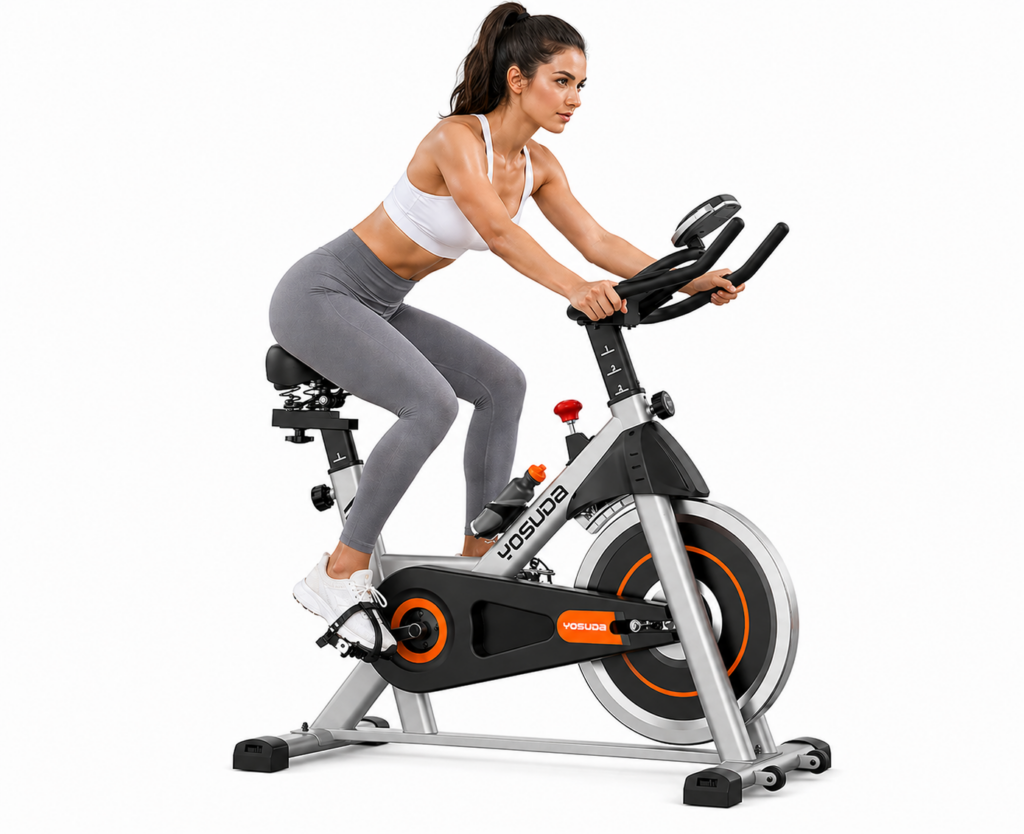
A budget-friendly, sturdy home spin bike with a 25 lb flywheel, magnetic resistance system, and a heavy-duty steel frame designed for stable, low-noise rides under 20 dB. It includes an LCD display for basic workout tracking, a 300 lb weight capacity, adjustable seat and handlebars, as well as Bluetooth support for compatible fitness apps.
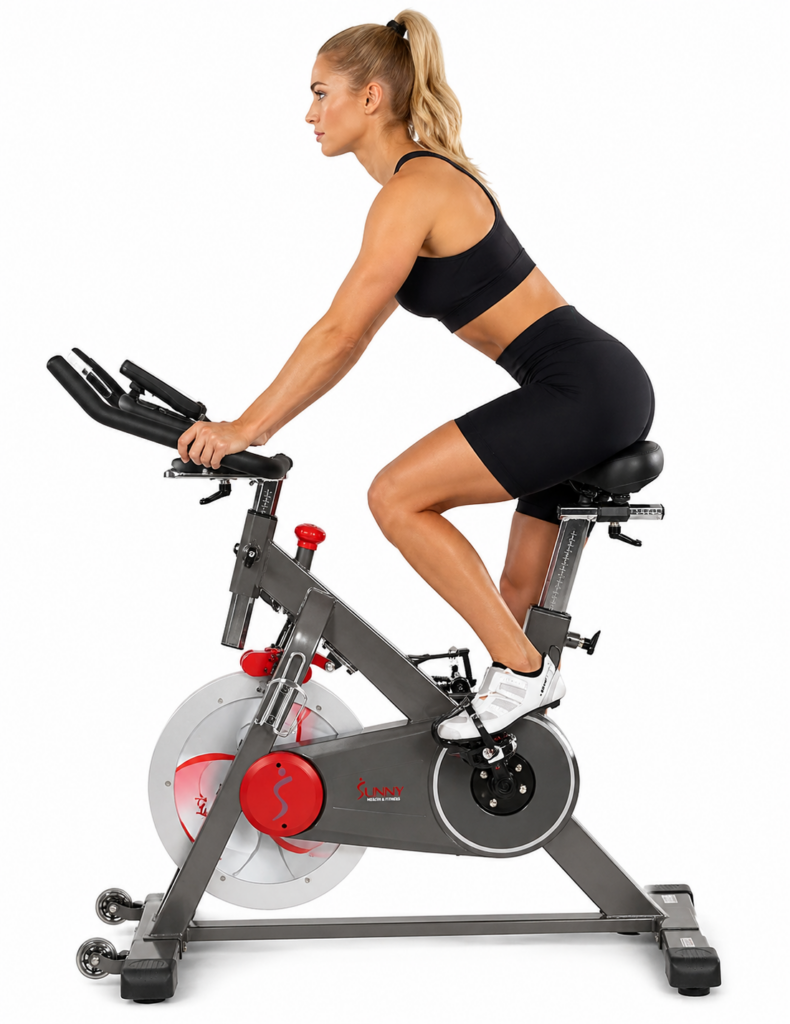
A belt-driven spinning bike with a 44 lb flywheel, magnetic resistance system, and precise intensity control via a micro-adjustment knob with instant stop function. It includes a digital monitor tracking speed, cadence, distance, time, calories, and pulse, plus 4-way adjustable seat/handlebars, clip-in compatible pedals, and a 300 lb weight capacity for stable, customizable riding.
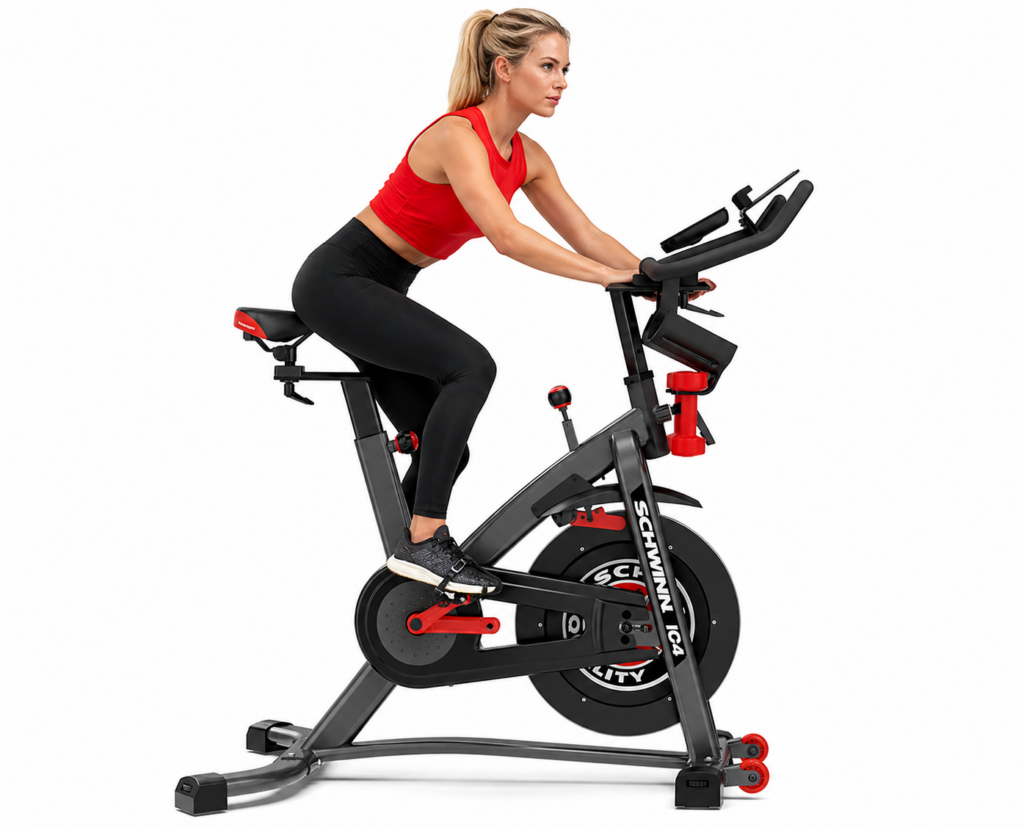
A magnetic resistance spin bike with 100 micro-adjustable levels for smooth, quiet rides and compatibility with apps like Peloton and Zwift. It features a backlit LCD console tracking heart rate, RPM, time, distance, speed, and calories, along with dual-sided pedals, a race-style adjustable seat, and accessories including 3 lb dumbbells, a tablet holder, water bottle holder, USB charging port, and transport wheels.
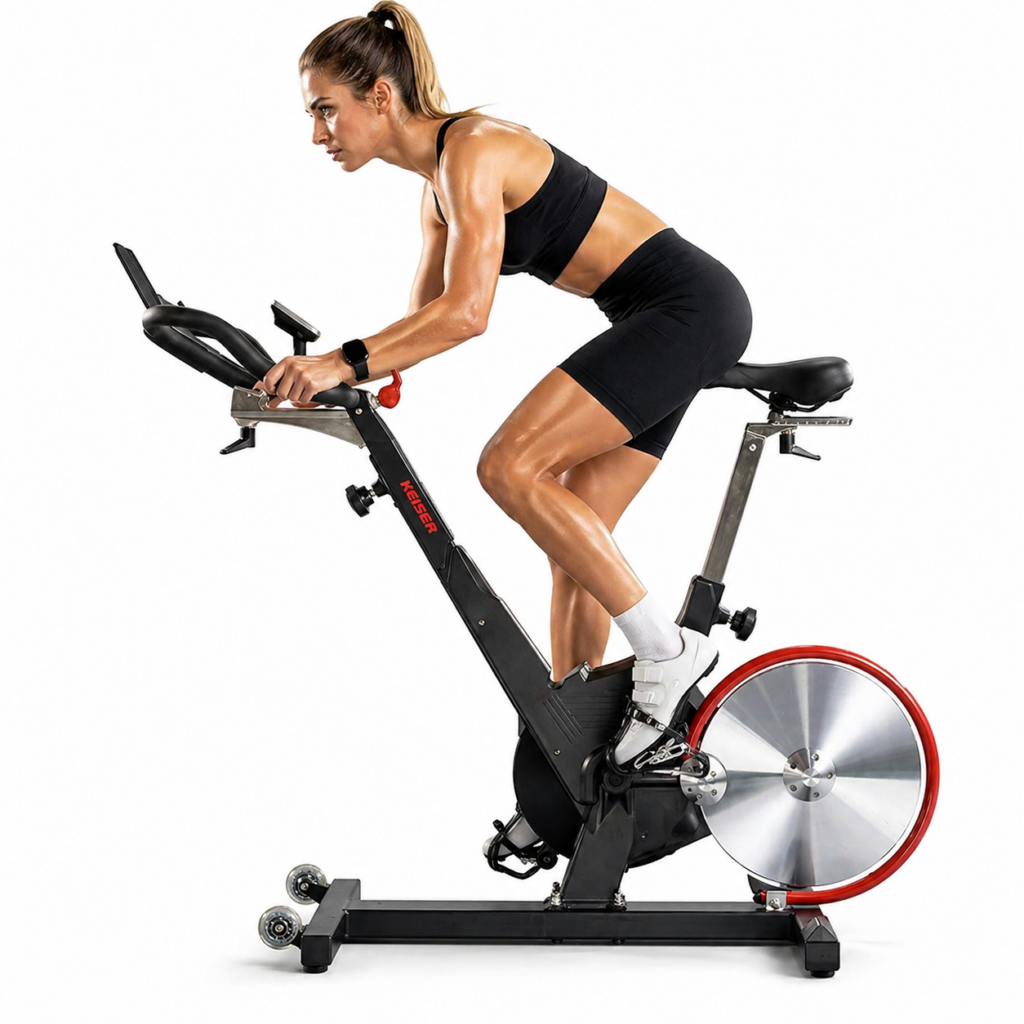
A studio-level spinning bike built for precision, durability, and ultra-smooth performance, with 72 levels of magnetic resistance and a maintenance-free, pedal-powered system that requires no batteries. It features Bluetooth FTMS/ANT+ connectivity, a Poly-V belt drive system, and performance-focused tracking including power zones, heart rate zones, speed, and METs on multiple display modes, with a maximum user capacity of 350 lbs.